
I’ve been following the Oscar Pistorius case recently. My own theory (all pure conjecture of course) is that they had a row, Reeva threatened to leave him, he got mad and became aggressive, so she shut herself in the toilet, refusing to come out; he then got even more mad, grabbed his gun and fired four shots through the toilet door. The rest, as they say, is history.
While following the case I happened to read a recent news story about a woman, Linda Cooney, who was acquitted of murder after killing her ex-husband in Florida 20 years ago but is just about to stand trial for shooting her son with the very same gun she used to kill her husband. Ms. Clooney claimed she shot her ex-husband in self-defense when he attacked her with a kitchen knife. She is now claiming the same motive for the shooting of her son, who she claims punched her. Ironically, it is this son who, when just 11 years old, provided crucial evidence leading to her acquittal by testifying that his father had a shiny object in his hand, despite originally telling investigators that his hands were empty. The son may now be living to regret that decision; the recent shooting left him paralyzed.
A widely-cited study of spousal murders in the US found that wives who kill their husbands were acquitted in 13% of the cases reviewed, while husbands who kill their wives were acquitted in only 1% of cases (the study didn’t include boyfriends and girlfriends, but it still doesn’t look too good for Oscar). The study also revealed that women kill husbands almost as often as men kill wives (women account for over 40% of defendants) but that they tend to serve shorter sentences than men when convicted of murder.
Of course, murder is the ultimate level of domestic violence and self-defense may provide valid justification in some cases; at least, it is much more likely to be successful than Oscar’s dubious claim of mistaken identity. In the vast majority of cases it is women who have been acquitted on the basis of self-defense. However, a landmark case recently took place in Australia when Phillip Bracken was found not guilty of murdering his de facto wife, Helen Curtis, despite being captured on CCTV shooting her in the head with a gun. The jury accepted his claim of self-defense after being told how he had regularly been beaten and abused by his partner.
Yes, although rarer than the other way round, domestic violence does take place against men. A recent study in the UK found that more than 40% of domestic violence victims are male. This shows that the traditional female victim/male perpetrator view of domestic violence is a gross simplification. Of course, the statistics show that women account for over half of domestic violence victims and over half of spousal murder victims; the difference is that domestic violence against men remains a taboo subject.
Joe, the main protagonist in Indelible Scars, is subjected to numerous verbal and physical attacks from his girlfriend, Claire, as illustrated by the opening of the novel:
‘Why are you so evil?’ she screamed.
As he turned, he glimpsed the ascending arc of her arm but was unable to move, caught in one-sided super-slow motion. The wooden rolling pin cracked against his skull. He clasped his hands to his head and fell back against the door, the blood’s dampness warm on his face and hands.
‘Stop bleeding on my clean floor!’ she berated him. ‘Get up and wash your face.’
He forced himself upright and noted with surprise that he could see stars spinning round his head. He had thought that only happened in cartoons. Shaking, he turned on the cold water and leant over the sink, letting the water gush over his forehead. He half-turned to see where she was: she was right behind him still brandishing the rolling pin.
‘Wash the blood off; you’re bleeding everywhere!’ The rage in her eyes told him not to argue.
He turned back to the sink, and then: whack! She hit him hard in the small of the back. He roared in pain. Fumbling, he grabbed a pile of kitchen tissue from beside the draining board, pressed it against his forehead and made for the back door.
‘Where do you think you’re going now?’ she snarled at him.
‘Hospital,’ he groaned.
‘Get back in here this second!’ She edged towards him gripping today’s chosen weapon.
‘I can’t. I have to go. Just let me go.’
‘Don’t you dare! Come here. I’ll fix it,’ she demanded.
But he was already gone, racing out into the street, the blood-soaked tissue clasped in desperation against his head.
I chose to put Joe in such a situation to highlight the fact that men are also victims of domestic violence and because I wanted to explore the complexities of why someone might stay in an abusive relationship. It’s so easy to simplify or criticize from the outside. For example, when a woman is regularly beaten by her husband but forgives him every time, it is perfectly natural to ask: why doesn’t she just leave him? And of course, she should. Clearly, not all abusive relationships involve violence; persistent emotional abuse, with little or no respite, can be just as damaging. So why do people stay in abusive relationships? I believe that there are many possible reasons: pride (i.e. not wanting to admit that you made a poor choice in choosing a partner or that your relationship has failed); low self-esteem or guilt (believing you deserve to be treated badly in some way); fear of the unknown or of being alone; and pity for the other person and wanting to help fix them. In most cases it is probably a combination of several of the above.
For a male victim of domestic violence it is especially difficult to share with other people and admit what’s really happening in a relationship. This is due, in part, to the macho psyche – after all, it is hard to admit that a woman much smaller than you has inflicted physical harm – but it is also due to the response of society. There is a valid fear of not being taken seriously. Popular culture often downplays violence against men and there is a tendency to excuse female excesses in behaviour: ‘He must have done something really bad to make her that mad!’ The police, and even healthcare professionals, are often no better. The following encounter between Joe and a female nurse illustrates this point:
He walked into the glare of the Accident and Emergency room, relieved to escape the bitter winter’s night. The room was almost full but there were a few empty chairs in the waiting area.
‘Can I help you?’ the receptionist asked when he reached the desk.
‘Yes, I have a wound on the back of my head,’ he answered.
She looked up at him for the first time, the corners of her mouth turning down as she saw the blood trickling down his neck.
‘Please help yourself,’ she said pushing a tissue box across the desktop with the tips of her manicured fingernails. ‘Your name please?’
‘Joe Gower,’ he replied.
‘Please take a seat, Mr Gower. You will be called when it’s your turn.’
He selected a seat at the back of the room and mopped the back of his head and neck with a bundle of tissue paper. Within seconds it became drenched and he applied another handful.
When his name was called he was ushered into a windowless consulting room where a female nurse asked him to take a seat.
‘So what happened to you?’ she asked, eyeing the bloody tissue in his hand.
He contemplated whether or not to invent an elaborate lie but didn’t have the energy to think of anything.
‘My girlfriend threw a coffee cup at my head,’ he answered.
‘Oh dear,’ she responded, failing to suppress a thin smile. ‘I hope it wasn’t your best china!’
He shifted in the chair, responding to an inner anger, but said nothing. It was a tasteless joke and he couldn’t help thinking that she would never say such a thing if a woman claimed her boyfriend had done the same, and yet he didn’t have the stomach for another confrontation.
Eventually, in most (but by no means all) unhealthy relationships the person on the receiving end realizes that enough is enough and extracts themselves from the partnership before things escalate to the level where someone’s life is at risk. Perhaps the most useful step to help make a decision is to ask yourself: do I really deserve to be treated like this? When the answer is no, the solution is obvious. It can, however, take a surprisingly long time to ask the right question and sadly, for some people, events spiral out of control before they get the chance.
We may never know the truth concerning what happened between Oscar and Reeva and I may well be completely wrong. All I know is that all victims of domestic violence, whether female or male, deserve to be treated with equal respect and deserve equal justice. I hope that Reeva Steenkamp and her family get the justice they deserve. May she rest in peace.


 In just a few weeks, Coronavirus has managed to achieve what climate change protesters have failed to in years: air travel has been cut drastically; pollution-belching industries in China have closed; fewer cars are on the roads; no one is travelling to sporting and entertainment events; far less people are going out to restaurants and bars.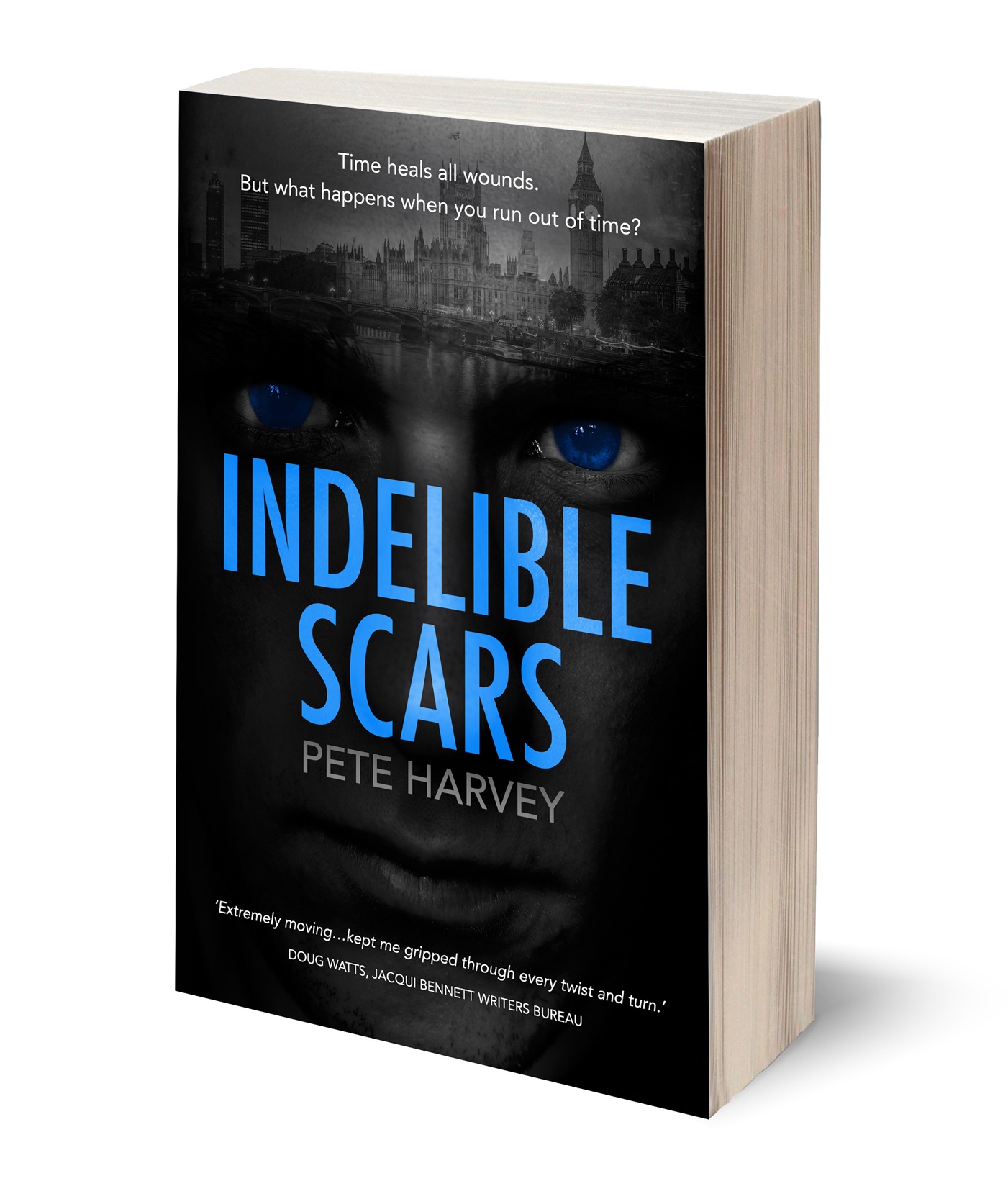




 The Nodding Lizard